.webp)


.webp)

Social Multiplayer
Games: The Future of
Online PlaySocial Multiplayer
Games: The Future of
Online PlaySocial Multiplayer
Games: The Future of
Online PlaySocial Multiplayer
Games: The Future of
Online Play
VR multiplayer games are redefining social gaming. Explore how ENVER is shaping virtual reality multiplayer experiences through chaotic, creator-led gameplay and cultural impact. Social multiplayer games are where online play is heading. Not because competition has gone away. Because competition on its own isn’t enough anymore.
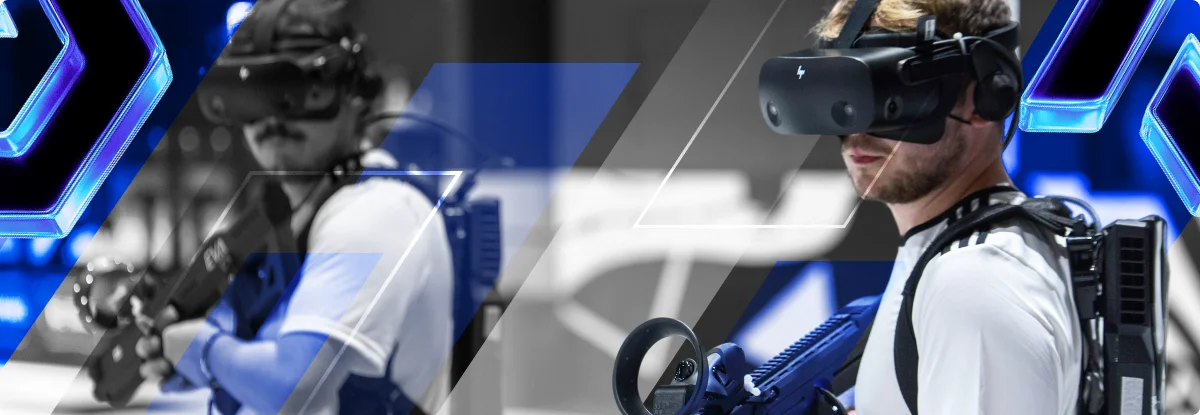
For years, multiplayer design was the same. You win, you lose, you rank up, and you keep playing. For some games, that’s still enough. For breakthrough titles that command real attention, it’s not enough anymore.
Players don’t just want to play. They want to inhabit games. React inside them. Build communities. And talk about them.
That shift is visible in the market data. Newzoo’s 2024 consumer research says 80% of consumers play video games, while 85% engage with games in some form, including viewing and community activity. Games are no longer just something people do; they are something people watch, discuss, remix and carry across platforms.
This is the category ENVER is building in.
What Makes a Game “Social-First”What Makes a Game “Social-First”What Makes a Game “Social-First”What Makes a Game “Social-First”

A social-first multiplayer game is not just a virtual reality multiplayer game with voice chat added on top
It is built around interaction as the main event. Players need to work together constantly to complete tasks and clear objectives. These games are behaviour-driven, and the most important variable isn’t the map, the weapon or the mission: it’s what other players to do each other once the system starts moving.
In a social-first multiplayer game, other players are the primary source of variation. Sessions become memorable because people interrupt each other, improvise, misread situations, show off, panic, pile on or invent their own rules.
That is why the strongest multiplayer social experiences don’t feel over-managed. They need enough shape to hold together, but enough freedom to let people create friction. The skill is in designing the right amount of instability.
Social games spread because they create momentsSocial games spread because they create momentsSocial games spread because they create momentsSocial games spread because they create moments
Distribution has changed as much as design has. Game discovery used to be driven by storefront featuring, review cycles and marketing spend. That still matters, but it is no longer the whole story. Social multiplayer games have another advantage: they are naturally legible as content.
Moments in these games travel well because they are easy to understand and hard to fully script. A missed jump, a betrayal, a panic reaction, a pile-up, an argument over voice chat. These are short-form narratives. They work on TikTok, Shorts, Reels and streams because something human is visible immediately.
YouTube’s own gaming data makes the scale of that distribution layer hard to ignore. In 2020, the platform said gaming content passed 100 billion watch hours globally and that more than 40 million gaming channels were active. That is not marginal creator activity at the edge of gaming. It is a parallel media system.
This is why online social gaming grows differently from traditional multiplayer. It does not rely only on retention loops. It grows through reaction loops. The game produces moments, creators amplify them, audiences turn those moments into interest, and new players arrive already understanding the tone of the experience.
If a game cannot generate moments, it has to buy attention. If it can, the players do part of the work for you.
How ENVER builds
in this categoryHow ENVER builds
in this categoryHow ENVER builds
in this categoryHow ENVER builds
in this category
ENVER’s advantage here is not that it uses the language of social gaming. It is that its games are already built around the behaviour patterns that define the category.

.webp)

4.9/5
23K ratings
MotoX

MotoX is a fast-paced VR motocross game built around multiplayer racing, tricks, and competition. It is not positioned as a simulation. It is designed for interaction, leaderboard rivalry, and repeat play.
Since launch, it has become one of the most popular racing games on the Meta platform, with strong player retention driven by its competitive multiplayer loop.
The key here is not realism. It is how players engage with each other, through racing, overtaking, and pushing the limits of the physics system.

42M
Views a month
Scary baboon
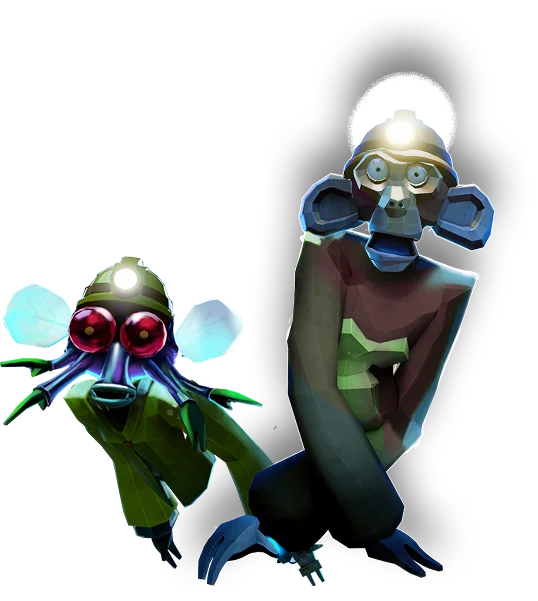
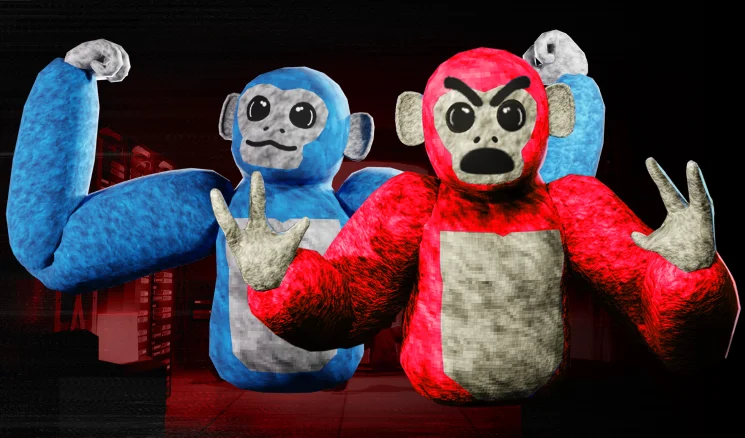
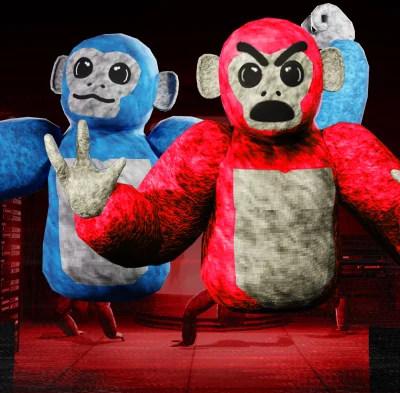
Scary Baboon takes a different approach. It is a chaotic, social horror sandbox where players interact in unpredictable ways.
The premise is simple, but the outcome is not. Players are placed into a shared environment and given enough freedom to create their own moments. This leads to emergent gameplay that is often more entertaining than anything scripted.
The result is scale. The game has reached high positions on the Meta store and driven significant engagement across platforms, fuelled by creator content and community interaction.
4.9/5
23K ratings
MotoX
MotoX is a fast-paced VR motocross game built around multiplayer racing, tricks, and competition. It is not positioned as a simulation. It is designed for interaction, leaderboard rivalry, and repeat play.
Since launch, it has become one of the most popular racing games on the Meta platform, with strong player retention driven by its competitive multiplayer loop.
The key here is not realism. It is how players engage with each other, through racing, overtaking, and pushing the limits of the physics system.
42M
Views a month
Scary baboon
Scary Baboon takes a different approach. It is a chaotic, social horror sandbox where players interact in unpredictable ways.
The premise is simple, but the outcome is not. Players are placed into a shared environment and given enough freedom to create their own moments. This leads to emergent gameplay that is often more entertaining than anything scripted.
The result is scale. The game has reached high positions on the Meta store and driven significant engagement across platforms, fuelled by creator content and community interaction.
Where the category goes nextWhere the category goes nextWhere the category goes nextWhere the category goes next
The future of social multiplayer games isn’t a great mystery. It is already visible in the direction of the market.
Players are engaging with games beyond play itself. Major platforms are building explicitly social roleplay spaces. Creator platforms have already become a serious part of game distribution. Put those together, and the next wave looks clear: more persistent environments, more player-led disruption, more overlap between game design and content design, and more multiplayer social experiences that behave like culture engines rather than sealed products.
That does not mean every game needs to become a hangout app. It means studios need to make a choice. They can build systems that try to control player behaviour, or they can build systems that let people create stories together.
ENVER is giving players the tools they need to build these worlds together.

.webp)