.webp)


.webp)
.webp)

.png)
VR Multiplayer Games: The Next Evolution of Social GamingVR Multiplayer Games: The Next Evolution of Social GamingVR Multiplayer Games: The Next Evolution of Social GamingVR Multiplayer Games: The Next Evolution of Social Gaming
VR multiplayer games are redefining social gaming. Explore how ENVER is shaping virtual reality multiplayer experiences through chaotic, creator-led gameplay and cultural impact.
Virtual reality multiplayer games are no longer experimental.
They are where gaming feels most alive.
VR isn’t a novelty or something you pick up by yourself. It’s social. It’s cultural. People don’t want to exist in virtual worlds alone. They want to collide with each other inside them.
This is where ENVER lives.
Giving players the tools, the worlds they need to create moments and spread them.
The Rise of VR Multiplayer ExperiencesThe Rise of VR Multiplayer ExperiencesThe Rise of VR Multiplayer ExperiencesThe Rise of VR Multiplayer Experiences

 (1).webp)
For years, VR struggled with a simple problem: it was impressive, but it wasn’t social.
Early VR games were all about immersion. They prioritised realism, mechanics, and environments, but missed what matters in gaming culture: community.
In the last few years, everything has changed.
The fastest-growing VR titles aren’t the most advanced. They’re the most social. Games where players talk, compete, disrupt each other, and generate real moments that live beyond their headset.
Multiplayer is no longer a feature in VR. It is the product.
Across the Meta Quest ecosystem, free-to-play, multiplayer-led titles are consistently outperforming premium, single-player experiences. ENVER’s titles are at the centre of this trend. This shift is visible across the Meta Quest ecosystem, where free-to-play, multiplayer-led titles are consistently outperforming premium, single-player experiences. ENVER’s own titles like MotoX sit directly in this trend, not as followers, but as early movers.

Why VR Is Inherently SocialWhy VR Is Inherently SocialWhy VR Is Inherently SocialWhy VR Is Inherently Social
VR doesn't work like traditional gaming. On a console or a mobile, every thing you do is through a screen and a joystick. In VR, players are physically present together. Every movement, gesture and reaction mimics real life.
Proximity
Players aren't just connected. They're in the same space. Standing next to someone and playing with them is a whole new play dynamic.
Communication
Voice chat is embedded directly into the experience. Players communicate like they do in real life.
Content
What happens in the game doesn't stay there. Interactions are unpredictable. Content is inevitable.
This is where VR overlaps with platforms like TikTok and YouTube. The best multiplayer games are not just played, they are watched.
100M+
Hours of Scary Baboon watched on YouTube and TikTok
ENVER’s Role in VR Multiplayer GamingENVER’s Role in VR Multiplayer GamingENVER’s Role in VR Multiplayer GamingENVER’s Role in VR Multiplayer Gaming
ENVER’s approach to VR multiplayer games is grounded in one idea: games need to generate culture, not just engagement. Every single ENVER title focuses on building inherently social worlds, not isolated experiences.
.webp)

4.9/5
23K ratings
MotoX

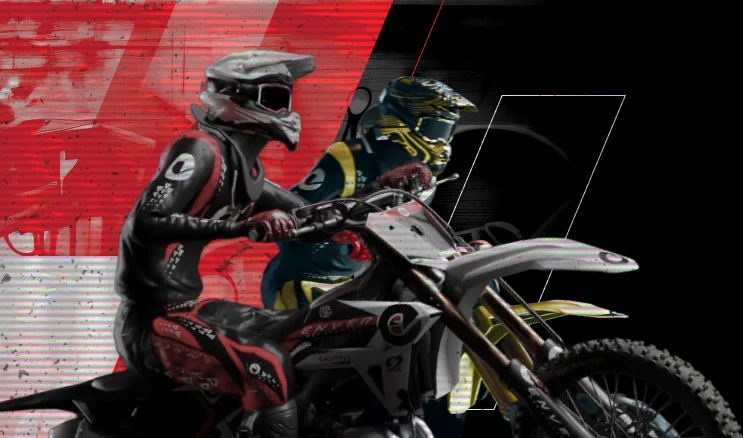
MotoX is a fast-paced VR motocross game built around multiplayer racing, tricks, and competition. It is not positioned as a simulation. It is designed for interaction, leaderboard rivalry, and repeat play.
Since launch, it has become one of the most popular racing games on the Meta platform, with strong player retention driven by its competitive multiplayer loop.
The key here is not realism. It is how players engage with each other, through racing, overtaking, and pushing the limits of the physics system.

42M
Views a month
Scary baboon
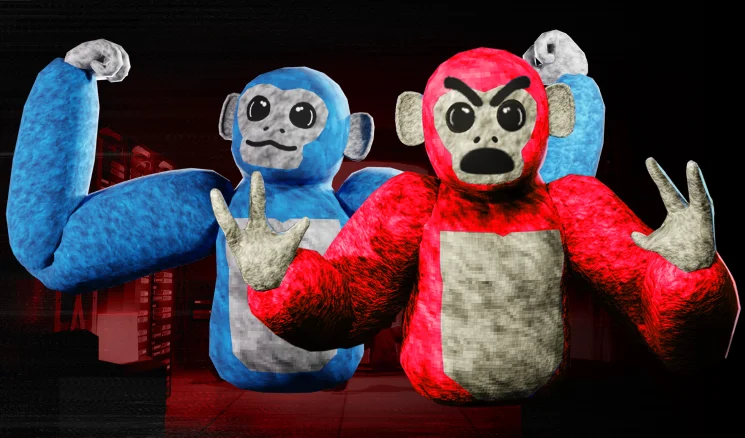
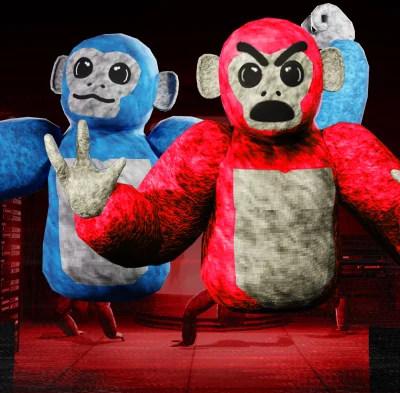
Scary Baboon takes a different approach. It is a chaotic, social horror sandbox where players interact in unpredictable ways.
The premise is simple, but the outcome is not. Players are placed into a shared environment and given enough freedom to create their own moments. This leads to emergent gameplay that is often more entertaining than anything scripted.
The result is scale. The game has reached high positions on the Meta store and driven significant engagement across platforms, fuelled by creator content and community interaction.
4.9/5
23K ratings
MotoX
MotoX is a fast-paced VR motocross game built around multiplayer racing, tricks, and competition. It is not positioned as a simulation. It is designed for interaction, leaderboard rivalry, and repeat play.
Since launch, it has become one of the most popular racing games on the Meta platform, with strong player retention driven by its competitive multiplayer loop.
The key here is not realism. It is how players engage with each other, through racing, overtaking, and pushing the limits of the physics system.
42M
Views a month
Scary baboon
Scary Baboon takes a different approach. It is a chaotic, social horror sandbox where players interact in unpredictable ways.
The premise is simple, but the outcome is not. Players are placed into a shared environment and given enough freedom to create their own moments. This leads to emergent gameplay that is often more entertaining than anything scripted.
The result is scale. The game has reached high positions on the Meta store and driven significant engagement across platforms, fuelled by creator content and community interaction.
Key Trends Shaping VR Multiplayer GamesKey Trends Shaping VR Multiplayer GamesKey Trends Shaping VR Multiplayer GamesKey Trends Shaping VR Multiplayer Games
Every single top performing virtual reality multiplayer game right now follows the same
patterns. The current wave of virtual reality multiplayer games is defined by a few clear shifts.
These are not abstract trends, they are observable patterns across top-performing titles.
Multiplayer-first design
Games are being built around interaction from the ground up. Single-player modes, if they exist, are secondary. The core loop is built around other people.
Controlled Chaos
Predictability kills replayability. The most successful VR games introduce systems that allow for disruption, mistakes, and unexpected outcomes.
Creator Amplification
Games are designed with shareability in mind. Clips, reactions, and emergent gameplay drive discovery. This is not marketing layered on top, it is built into the design.
Low Friction, High Engagement
Fast onboarding matters. Players need to get into a multiplayer session quickly, without long tutorials or complex systems. The depth comes from interaction, not menus.
Free-to-Play Dominance
Access drives scale. Free-to-play models lower the barrier to entry and increase the likelihood of multiplayer density, which is essential for social games to work.

.webp)